Introduction
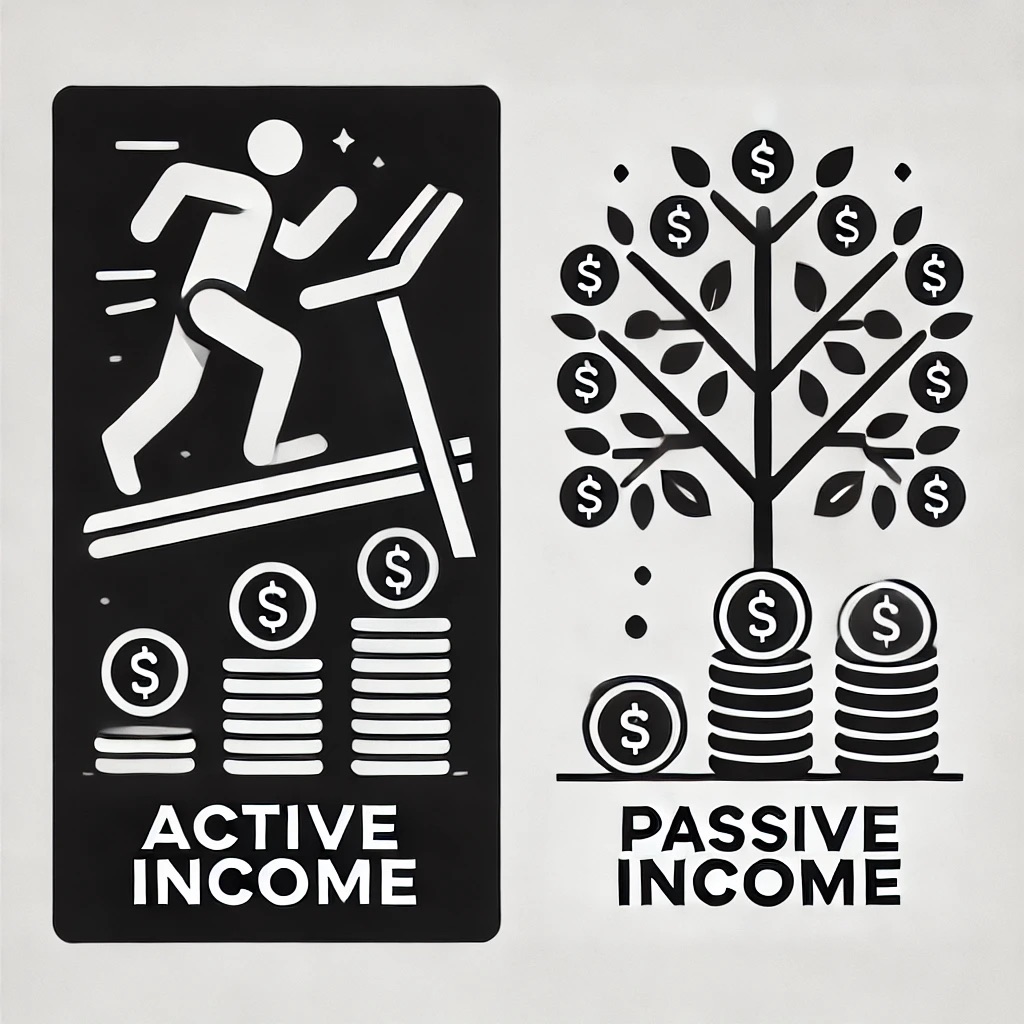
Most people earn money through active income, where they trade their time and effort for a paycheck. However, true financial freedom comes when you build passive income—money that continues to flow in even when you’re not actively working. Understanding the difference and learning how to transition from active to passive income is the foundation of long-term wealth.
What is Active Income?
Active income is money earned through direct effort, such as:
• Salaries from full-time jobs
• Freelance or contract work
• Commissions and sales-based earnings
This type of income requires continuous work—once you stop working, the money stops coming in.
What is Passive Income?
Passive income is money earned with minimal ongoing effort. Some common sources include:
• Rental income from real estate properties
• Dividends from stocks and investments
• Royalties from books, music, or intellectual property
• Affiliate marketing and online businesses
• Automated side businesses
While passive income requires initial investment (either time or money), it provides financial stability and freedom over time.
How to Transition from Active to Passive Income
1. Maximize Active Income First – Use your salary or earnings to fund investments.
2. Invest in Income-Generating Assets – Start with stocks, real estate, or businesses that create passive returns.
3. Automate and Scale – Set up systems where your money works for you with minimal involvement.
4. Diversify Your Income Streams – The more sources of passive income you have, the more financial security you build.
Conclusion
While active income pays the bills, passive income builds wealth and freedom. The key is to gradually shift your financial strategy so that more of your income comes from assets that generate money for you—even while you sleep. Start small, be consistent, and watch your financial independence grow.
 CJ NEXUS EDU