Introduction
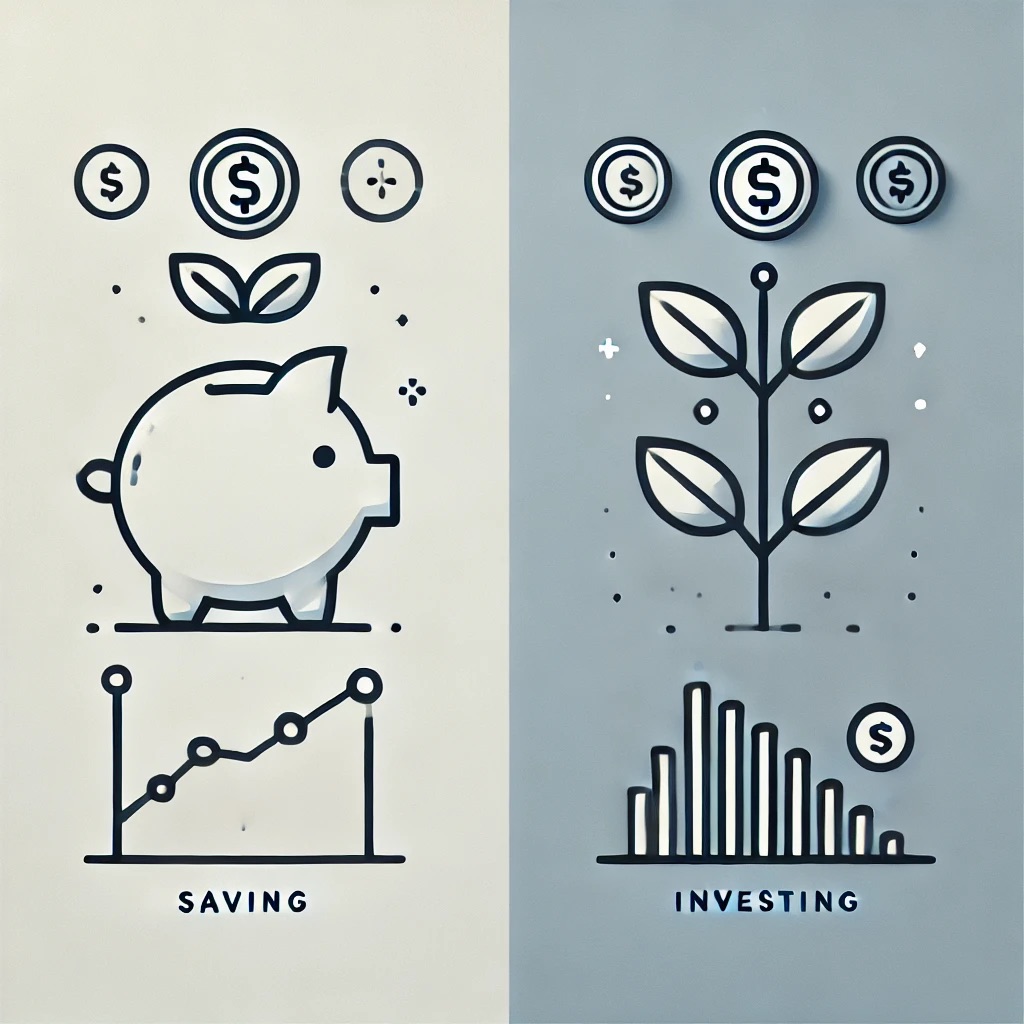
Many people believe that saving money is the safest way to secure their financial future. While saving is essential, relying solely on it can be a costly mistake. Inflation gradually erodes the value of money sitting in a savings account, whereas investing offers the potential for long-term growth. So, how do you strike the right balance between saving and investing?
The Purpose of Saving
Saving is about safety and accessibility. It ensures that you have liquid funds available for emergencies, short-term goals, and unexpected expenses. A well-funded emergency account (typically 3 to 6 months of living expenses) protects you from financial shocks and provides peace of mind. However, keeping excessive cash in low-yield savings accounts can result in a loss of purchasing power over time.
The Power of Investing
Investing is about growing wealth. By putting money into assets such as stocks, bonds, mutual funds, or real estate, you allow your wealth to compound over time. Unlike savings, investments can outpace inflation and generate passive income. Although investing carries risks, a well-diversified portfolio can mitigate potential losses while maximizing returns.
Finding the Right Balance
To achieve financial success, it’s crucial to determine how much to save and how much to invest. Consider these guidelines:
1. Build an Emergency Fund First – Before investing, ensure you have sufficient savings for unexpected situations.
2. Define Your Financial Goals – Short-term goals (e.g., buying a car, vacation) should be funded through savings, while long-term goals (e.g., retirement, wealth accumulation) are better suited for investments.
3. Manage Risk Wisely – If you’re new to investing, start with lower-risk options and gradually expand into higher-yield investments.
4. Diversify Your Portfolio – Spread investments across different asset classes to minimize risk.
5. Review and Adjust Regularly – Market conditions and personal circumstances change, so regularly reassess your financial strategy.
Conclusion
While saving offers security, investing provides financial growth. A well-balanced strategy involves maintaining an emergency fund while strategically investing for long-term wealth creation. The key is to understand your financial goals and allocate funds accordingly—ensuring both stability and prosperity.
 CJ NEXUS EDU